The rapid advancement of robotics is transforming the way businesses operate across industries
The Future of Robotics in Business
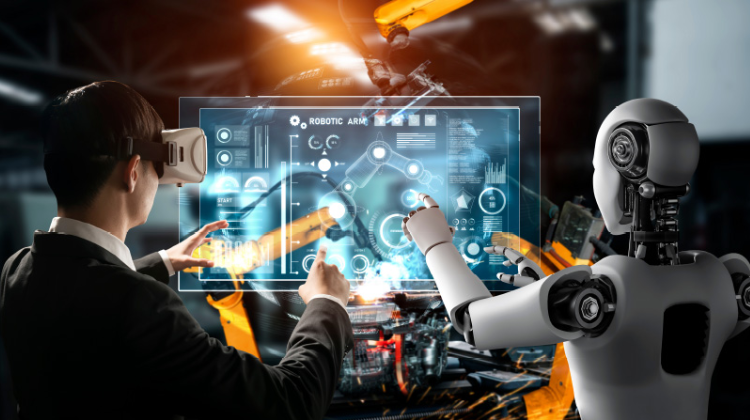
The rapid advancement of robotics is transforming the way businesses operate across industries. Once associated primarily with automotive manufacturing and large-scale industrial production, robots have now become an essential part of modern business operations. From manufacturing plants and warehouses to hospitals, retail stores, and logistics centers, robotics is helping organizations improve productivity, reduce costs, enhance accuracy, and solve labor shortages.
As Artificial Intelligence (AI), machine learning, and automation technologies continue to evolve, robots are becoming smarter, more adaptable, and capable of performing increasingly complex tasks. Businesses that invest in robotics today are not only improving operational efficiency but also preparing themselves for the future of work. While robotics presents enormous opportunities, it also requires organizations to rethink workforce strategies, technology investments, and business processes.
The Evolution of Robotics in Business
Robotics has come a long way over the past few decades. Early industrial robots performed simple, repetitive tasks such as welding, assembling, and packaging products on factory production lines. These machines improved manufacturing speed but required constant programming and human supervision.
Today, modern robots are equipped with artificial intelligence, advanced sensors, cameras, and machine learning capabilities. They can recognize objects, navigate environments, analyze data, collaborate with humans, and adapt to changing situations with minimal intervention.
This evolution has expanded the use of robotics far beyond manufacturing, allowing businesses in almost every industry to benefit from intelligent automation.
Improving Productivity Through Automation
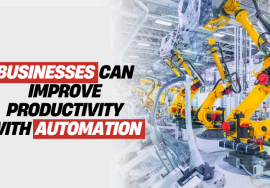
One of the primary reasons businesses are adopting robotics is to increase productivity. Robots can perform repetitive tasks continuously without fatigue, reducing production time while maintaining consistent quality.
In manufacturing facilities, robots assemble products, inspect components, package goods, and transport materials with remarkable precision. In warehouses, autonomous mobile robots organize inventory, retrieve products, and assist with order fulfillment.
By automating repetitive activities, businesses allow employees to focus on higher-value responsibilities such as innovation, customer service, quality improvement, and strategic decision-making. This combination of robotic efficiency and human expertise creates a more productive workplace.
Robotics in Logistics and Supply Chain Management
The logistics industry has experienced significant transformation through robotics. Growing e-commerce demand has increased pressure on businesses to process orders quickly and accurately.
Autonomous robots now assist in sorting packages, moving inventory, loading shipments, and optimizing warehouse operations. Intelligent robotic systems can identify the shortest routes, minimize travel time, and improve inventory accuracy.
These technologies reduce delivery times, lower operational costs, and help businesses respond more effectively to changing customer expectations.
Enhancing Workplace Safety
Many industries involve hazardous working environments where employees are exposed to heavy machinery, toxic materials, extreme temperatures, or dangerous chemicals. Robotics allows businesses to automate these high-risk tasks, significantly improving workplace safety.
>In manufacturing plants, mining operations, oil and gas facilities, and construction sites, robots perform inspections, handle hazardous materials, and complete dangerous operations without putting human workers at unnecessary risk.
Reducing workplace accidents not only protects employees but also lowers insurance costs, minimizes downtime, and improves overall operational reliability.
Robotics in Customer Service
Modern robotics is also changing customer interactions. Service robots are increasingly being used in hotels, airports, hospitals, restaurants, and retail stores to assist customers, provide information, guide visitors, and perform routine services.
>Combined with artificial intelligence, these robots can answer common questions, process simple transactions, and provide personalized recommendations.
>Although human interaction remains important, robotic assistants help businesses deliver faster service while allowing staff to focus on more complex customer needs.
AI Makes Robots Smarter
Artificial Intelligence has dramatically expanded the capabilities of business robotics. Instead of following fixed instructions, AI-powered robots can analyze their surroundings, recognize patterns, make decisions, and continuously improve their performance through machine learning.
For example, intelligent manufacturing robots can identify production defects automatically, while warehouse robots optimize inventory movement based on real-time demand. Healthcare robots assist surgeons with precision procedures, and agricultural robots monitor crop conditions to improve farming efficiency.
The combination of robotics and AI enables businesses to achieve greater flexibility and operational intelligence than ever before.
The Rise of Collaborative Robots (Cobots)
One of the most significant trends shaping the future of robotics is the development of collaborative robots, commonly known as cobots. Unlike traditional industrial robots that operate separately behind protective barriers, cobots are designed to work safely alongside human employees.
Cobots assist workers by handling physically demanding or repetitive tasks while humans perform activities requiring creativity, judgment, and problem-solving.
This collaboration increases productivity without eliminating the need for skilled employees. Many businesses are finding that the most effective workplaces combine robotic precision with human expertise.
Challenges of Robotics Adoption
Despite its many benefits, implementing robotics also presents challenges. Initial investment costs for robotic systems, software integration, maintenance, and employee training can be substantial, particularly for small and medium-sized businesses.
Organizations may also face technical challenges when integrating robotics into existing production systems. Additionally, employees may have concerns about job displacement and changing workplace roles.
>To address these challenges, businesses should communicate openly with their workforce, invest in employee training, and position robotics as a tool that enhances human productivity rather than replacing human talent.
Preparing for the Future Workforce
As robotics becomes more common, workforce skills will continue to evolve. Employees will increasingly need technical knowledge to operate, monitor, maintain, and collaborate with intelligent robotic systems.
Businesses should invest in continuous learning programs that develop digital skills, automation knowledge, and problem-solving capabilities. Organizations that prioritize employee development will be better prepared for technological transformation while maintaining a motivated and skilled workforce.
The Future Outlook
The future of robotics in business extends far beyond automation. Emerging technologies such as autonomous mobile robots, humanoid robots, predictive maintenance systems, robotic process automation (RPA), and AI-driven decision-making will continue to reshape industries over the coming decade.
>Small and medium-sized businesses are also expected to adopt robotics at a faster pace as technology becomes more affordable and accessible. Industries including healthcare, agriculture, construction, logistics, hospitality, finance, and retail will continue expanding their use of robotic solutions to improve efficiency and remain competitive.
Businesses that embrace robotics strategically today will be better positioned to adapt to future market demands and technological advancements.