
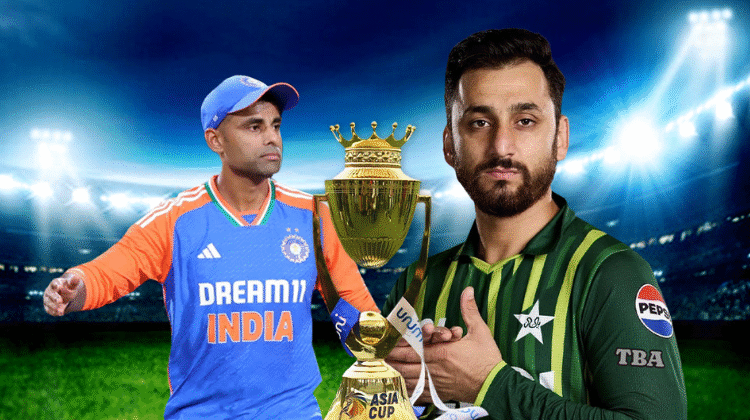
A Thrilling Cricketing Finale: India vs Pakistan in the Asia Cup 2025
India defeated Pakistan by five wickets in a nail-biting finale at the Dubai International Stadium on 28 September 2025 to lift the Asia Cup, defending their title and earning a record ninth Asia Cup title.
Although the match itself generated the sort of thrill rivalry fans crave, issues off the pitch introduced complexity to tensions, heightening already tense political relations between the two countries.
Match Recap
Pakistan started their innings first, and they were off to a good start. Sahibzada Farhan was solid with the bat (57 off 38) and Fakhar Zaman added 46 off 35, sharing an 84-run partnership for the first wicket that put Pakistan in a fine position early on.
But then came a collapse. Pakistan lost nine wickets for a mere 33 runs, getting bowled out for 146 in 19.1 overs. Kuldeep Yadav was the principal architect of the collapse, claiming 4 for 30; supporting acts were played by Varun Chakaravarthy, Axar Patel, and Jasprit Bumrah.
Pursuing 147, India’s start was also bumpy — early wickets came as Abhishek Sharma (5), captain Suryakumar Yadav (1), and Shubman Gill (12) got dismissed cheaply, leaving India reeling at about 20/3.
The recovery was mainly achieved by Tilak Varma, whose pressure-defying 69 not out from 53 balls kept India’s pursuit together. He received important assistance from Sanju Samson (24 from 21) and Shivam Dube (33 from 22), specifically a 60-run fifth-wicket partnership that turned the game back in India’s direction.
India scored the target in the last but one over, with two balls to go. Rinku Singh struck the boundary that sealed what turned into an electric, edge-of-the-seat finish.
Controversies and Off-Field Drama
While the on-ring cricket lived up to the hype, a number of off-field controversies shaded the match and its lead-up:
Trophy Presentation Refusal
India declined to receive the trophy and winners’ medals from Mohsin Naqvi, the President of the Pakistan Cricket Board (PCB) and Asian Cricket Council (ACC) chairman. The Indian team claimed that it would be inappropriate on their part to accept it from him amid political tensions. The trophy was later taken down from the podium, and there was no official presentation to India.
Lack of Handshakes / Other Sea of Tension
During the course of the tournament (in the group, super-4, and final), there were some examples where Indian and Pakistani players refrained from making customary gestures of sportsmanship, such as handshakes. These were seen by many to have been motivated by instructions or pressure outside the field, rather than by instinctual behaviour.
Political Backdrop
The cricket games in this Asia Cup have been played against the backdrop of recent armed clashes between India and Pakistan (most recently, fights in May 2025). It has made every meeting more charged.
Captain of Pakistan, Salman Agha, was dismayed at what he perceived to be disrespectful behavior, not only towards Pakistan but towards cricket as a whole. He stated that although some official duties (such as the acceptance of individual awards) were done, in general, the behavior by some from the Indian camp conveyed the wrong message.
The Economic Times
What It Means Going Forward
This game and the scandals that accompanied it have a number of implications:
Sport and Politics: The line dividing sporting contests and political concerns is becoming thinner in high-visibility matches such as India vs Pakistan. Fans, cricket administrations, and governing bodies will have to weigh how to maintain the purity of sport in the midst of such an emotionally charged setting.
Media & Fans Expectations: India’s unbroken streak against Pakistan in this tournament (three wins) will be regarded as a victory of form and temperament. For Pakistan, the collapse in the last match and failure to close games (or avert collapses) will probably invite internal soul-searching.
Organizational and Governing Reactions: The governing authorities of cricket (ACC, ICC) could come under pressure to better insulate match rituals and procedures from political controversy. Protests, referee protest-protests, and presentation ceremony crises — all represent moments at which sport’s managers might require stronger guidelines.
Player Psychology: For Indian players, getting out of the uncertain beginning in the final (losing initial wickets) and still retaining nerves under pressure will be a morale booster. For Pakistani players, particularly the middle and lower order ones, the collapse will question their temperament and flexibility.
Conclusion
The India-Pakistan final of the 2025 Asia Cup will be recalled not as a game, but as a complex event where better cricketing skill, emotion, and politics converged. India deserved to win: Varma’s calm middle-order innings, Kuldeep’s crucial wickets, and mental strength under duress. Pakistan displayed moments of brilliance, particularly at the beginning of the innings, but could not maintain them when it was most needed.
While cricket enthusiasts automatically embrace athletic success, this game also points to the fact that sporting competitions between bordering nations are not ever only about on-field occurrences. What gets learned here may determine the way future games are tackled, how they’re administered, and how much outside tensions can remain distinct.