
Pakistan Floods and Cloudbursts: A Climate Wake-Up Call
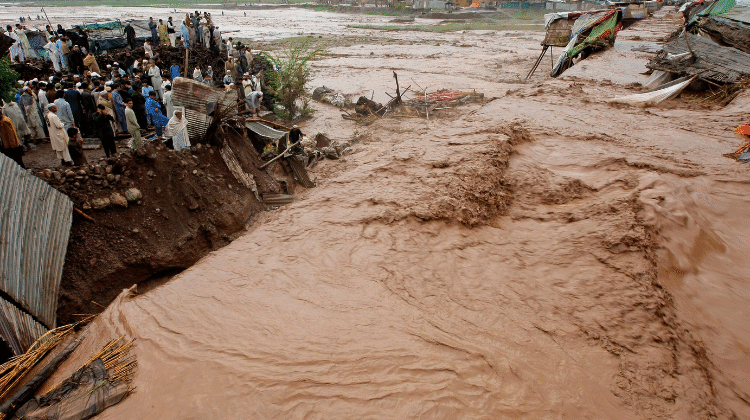
Pakistan once again is facing the disastrous effect of heavy monsoon rains, floods, and suspected cloudbursts that have caused widespread destruction in several provinces. Flash floods in the past few weeks have brought unprecedented loss, especially in Khyber Pakhtunkhwa (KP), Gilgit Baltistan (GB), and Azad Jammu & Kashmir (AJK). The causalities have crossed 700 lives tragically, with hundreds missing and almost a thousand injured. Hundreds of families have been left homeless as homes, fields, and essential infrastructure are reduced to rubble. Rescue efforts are in full swing, with NDMA, Rescue 1122, paramilitary troops, and local governments working day and night to rescue lives, but the sheer magnitude of the disaster has overwhelmed the machinery.
Most of the media reports have blamed the tragedy on cloudbursts—brief, heavy showers that can deliver more than 150 millimeters of rain in an hour. In districts such as Buner and Swabi, entire villages were washed away, with Pir Baba in Buner witnessing one of the deadliest tragedies where over 200 people lost their lives. In Swabi’s Darwodi village, at least 15 people were killed when flash floods triggered by torrential rain submerged houses and caused landslides. Nevertheless, meteorologists from the Pakistan Meteorological Department (PMD) explained that what hit these regions was not a cloudburst in a technical sense but a low-frequency occurrence of two strong weather systems crashing against each other and creating large-scale and sustained precipitation over KP and surrounding areas.
The devastation has been phenomenal in various districts. In Buner, one family lost 24 members after their 36-room ancestral house collapsed days before a wedding, with festivities being reduced to a mass funeral. In Bajaur, Mansehra, Shangla, and Battagram, more casualties are still mounting as flash floods washed through low-lying districts with minimal warning. Gilgit Baltistan is threatened by an imminent threat of another kind: a seven-kilometer-long mountain lake that has formed in recent times due to a huge mudslide. Although some water has been discharged, scientists say that if the natural dam collapses, it would unleash devastating flooding downstream, risking the lives of thousands more.
Scientists and climate experts are increasingly attributing the larger context behind such catastrophes. Pakistan’s monsoon cycles have become increasingly unpredictable owing to climate change, with rain falling in more concentrated, intense pulses that overwhelm natural drainage capacity. What were once extraordinary weather occurrences are now occurring with frightening frequency, frequently producing non-riverine flooding even in metropolitan areas like Islamabad and Chakwal. Deforestation, uncontrolled urbanization, and development in flood-prone areas have further heightened the devastation, leaving populations open to the full fury of extreme weather.
The human toll of these floods has been tragic. Families have been separated, businesses lost, and whole communities left grieving. Relief groups have come in for criticism over slow delivery to outlying areas and the inadequacy of early warning systems. Authorities contend, though, that the sheer scale and abruptness of the rainstorms made true forecasting virtually impossible. Nevertheless, the disasters emphasize the necessity of enhanced preparedness, climate-resilient infrastructure investment, and more resilient community education on disaster response.
What Pakistan is facing is not an isolated emergency—rather, it is part of a broader climate emergency. The intensification of monsoon rains, the heightened frequency of cloudburst-like occurrences, and the cascading effect on at-risk communities emphasize the need for action. Strengthening early-warning systems, implementing sustainable land-use policies, reforestation, and flood-resilient infrastructure investment have to become national priorities now. However, Pakistan’s dilemma also mirrors the larger world reality of climate injustice when nations that are least contributing towards greenhouse gas emissions are bearing the largest brunt of climate-related disasters.
The floods and cloudbursts in recent times are a poignant reminder that Pakistan is at the vanguard of climate change. Unless urgency is displayed and all-encompassing efforts are made, such tragedies will keep on recurring, claiming more lives, wrecking livelihoods, and eroding national cohesion. It is not merely a natural calamity—it is a harbinger of what is in store for us in an increasingly warming globe.