Artificial Intelligence AND FUTURE JOBS
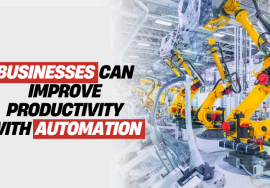
Artificial Intelligence is reshaping the global job market faster than any previous wave of technological change, sparking vital conversations about the role of human labor in a rapidly automated world. As Artificial Intelligence systems grow smarter capable of handling tasks like language translation, image recognition, pattern analysis, and decision-making they are transforming industries from the ground up. Sectors ranging from logistics and finance to healthcare and customer service are embracing intelligent automation to streamline operations, reduce costs, and boost productivity. But while these advances bring undeniable benefits, they also raise pressing concerns chief among them being the displacement of traditional jobs. Routine, predictable roles such as data entry, telemarketing, and back-office administration are increasingly vulnerable to being replaced by machines that never sleep, don’t need benefits, and don’t make human errors.
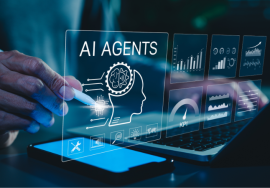
Understandably, this has triggered alarm bells about widespread job loss and economic uncertainty. But there’s another side to the story one that’s often overshadowed by fear. While AI is indeed replacing some roles, it is simultaneously giving rise to entirely new career paths. Positions like machine learning engineers, AI ethics consultants, prompt engineers, data labelers, and human-AI collaboration designers are rapidly gaining traction. According to the World Economic Forum, while automation may displace 85 million jobs globally by 2025, it could also generate 97 million new roles jobs that are more aligned with the future’s evolving human-machine dynamics.
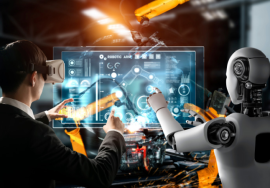
One of the biggest shifts we’re seeing is a rising demand for hybrid skills—blending technical know-how with human-centric abilities like empathy, creativity, communication, and problem-solving. Rather than framing AI as a competitor, many organizations are moving toward a collaborative model, where human and machine strengths complement each other. In healthcare, for instance, AI can rapidly analyze scans and predict conditions, but the emotional intelligence required for patient care remains uniquely human. In classrooms, AI might help tailor learning materials, but the guidance and mentorship that teachers provide can’t be replicated by a machine. And in creative fields, AI can suggest music, design, or written drafts but it still relies on human vision and context to shape something truly meaningful.
This partnership between human intuition and artificial precision is changing what productivity looks like and unlocking new realms of possibility. However, navigating this transition won’t happen on its own. It demands intentional action from governments, businesses, and educational systems alike. The first priority: invest in upskilling and reskilling. Workers need access to training that equips them for roles AI can’t fill or ones where they can work with AI. Likewise, educational systems must evolve beyond rote memorization, focusing instead on digital fluency, critical thinking, and cross-disciplinary learning. After all, the future doesn’t belong to those who know all the answers it belongs to those who know how to adapt when the questions change.
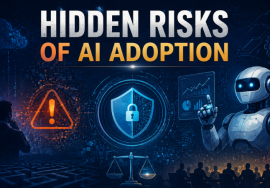
There are also ethical and policy considerations that must be addressed head-on. AI doesn’t just impact jobs it impacts data privacy, fairness, and social equity. Governments must create regulatory frameworks that protect workers and ensure that AI development remains transparent, inclusive, and accountable. Ideas like universal basic income (UBI), job transition programs, or public-private retraining partnerships could serve as lifelines for those navigating career shifts caused by automation.
At the business level, leadership must shift from resisting AI to embracing a culture of continuous learning and technological integration. Forward-thinking organizations are already using AI not to eliminate workers, but to empower them freeing up time for higher-value tasks, creative work, and strategic thinking. Leaders who treat AI as a force multiplier, rather than a job killer, are better positioned to build resilient, innovative teams that thrive in the digital age.
The global nature of AI also presents a major opportunity for emerging economies. By skipping traditional industrial development stages, these countries can build digitally native workforces and tap into new markets, giving them a chance to lead not just follow in the AI revolution.
While anxiety about job losses is natural, history offers a more hopeful outlook. The invention of electricity, the rise of the internet, and even the computer revolution sparked similar fears but each led to the creation of new industries, roles, and possibilities. AI is no different. If we approach it with curiosity, courage, and a commitment to human-centered progress, we’ll not only weather the change, we’ll grow because of it.
In the end, the future of work isn’t about humans vs. machines it’s about humans with machines. The real question isn’t whether AI will change the job market it already has. The question is: are we ready to adapt, evolve, and lead in this new era?