
A Game-Changing Discovery in Medicine: Targeting Brain Inflammation with Nanotechnology
In a groundbreaking breakthrough that could reshape the landscape of medical treatments, researchers at *Oregon State University (OSU)* have unlocked a powerful new method to deliver anti-inflammatory drugs directly to the brain. This could lead to potential therapies for a wide range of debilitating conditions, including *Alzheimer’s, **Parkinson’s, **Multiple Sclerosis, and even **cancer cachexia*.
But this discovery isn’t just about developing new drugs—it’s about *overcoming one of the most stubborn barriers in medicine: the **blood-brain barrier* (BBB). For years, this protective shield surrounding the brain has kept potentially life-saving treatments out, making conditions like neurodegenerative diseases and certain cancers even more challenging to treat.
—
### *The Secret? Nanoparticles with Precision Targeting*
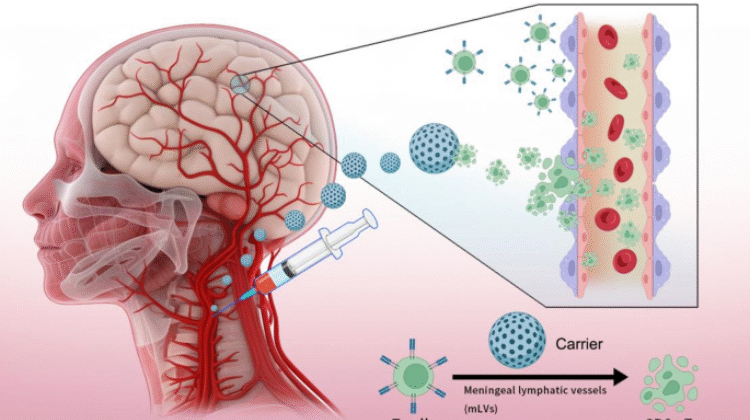
At the heart of this revolutionary method are *specially engineered nanoparticles, **less than 100 billionths of a meter in size. These tiny, powerful carriers are designed to navigate the body’s complex systems and deliver therapeutic agents where they’re needed most. In this case, to the **hypothalamus*, a tiny but critical part of the brain responsible for regulating vital functions such as hunger, body temperature, and emotional responses.
The study’s results, published in Advanced Healthcare Materials, offer an exciting glimpse into what could be possible. Researchers used *dual peptide-functionalized polymeric nanocarriers, which successfully targeted the hypothalamus in **mouse models. These nanoparticles didn’t just cross the BBB—they zeroed in on the hypothalamus to deliver a **drug that inhibits a key protein associated with inflammation*.
—
### *Why the Hypothalamus?*
The hypothalamus may be small, but it plays a crucial role in regulating the body’s internal balance. It controls hunger, sleep cycles, hormone production, and more. In the context of *cancer cachexia—a devastating condition where patients lose muscle mass and weight, even with normal food intake—this part of the brain becomes inflamed, disrupting appetite and metabolism. The results are often fatal, with cachexia affecting up to **80% of advanced cancer patients*.
But here’s the twist: inflammation in the hypothalamus *isn’t just limited to cancer. It’s also tied to **neurodegenerative diseases* like *Alzheimer’s* and *multiple sclerosis*, making the implications of this discovery far-reaching.
—
### *Overcoming the Ultimate Hurdle: The Blood-Brain Barrier*
The real challenge for researchers has always been getting *therapeutic agents* past the blood-brain barrier. This natural shield is designed to protect the brain from toxins, but it also prevents many life-saving medications from entering.
And that’s where the *nanocarriers* come in. By using a *dual-targeting approach, the nanocarriers didn’t just make it through the BBB—they delivered the drug directly to the microglia cells in the hypothalamus. These cells, which mediate inflammation, are key players in conditions like **cancer cachexia* and *neurodegenerative diseases*.
Once the nanocarriers reached the microglia, they *released the therapeutic drug, triggered by elevated levels of glutathione within the cells. In their experiments, the researchers saw **a 94% increase in food intake, and the mice were able to **preserve body weight and muscle mass*—two major victories in the battle against cachexia.
—
### *The Road Ahead: A New Era for Brain-Related Conditions*
While the breakthrough initially focuses on *cancer cachexia, the potential for this technology extends far beyond that. With its ability to **cross the blood-brain barrier* and target *brain inflammation, this method could open new doors for treating a wide array of neurological conditions like **Alzheimer’s* and *multiple sclerosis*.
“This is just the beginning,” said *Oleh Taratula*, the lead researcher on the project. “The possibilities are endless for how this nanoparticle delivery system could transform the treatment of neurological diseases.”