
Corporate Performance measurement with Rise of AI
BUSSINES INNOVATION;
AI has been making headlines in recent years as it increasingly becomes integrated into various industries. Customer service inquiries are also handled by AI-powered chatbots, which can understand customer queries and provide personalized responses in real-time. This not only saves time and resources for business but also improves the customer experience by providing faster and more convenient service. Marketing campaigns are also being transformed by AI. By analyzing data on customer behavior and preferences, businesses can create personalized and targeted campaigns that are more likely to be effective. In the supply chain, AI optimizes logistics and predicts demand, resulting in cost savings and improved Corporate Performance measurement. For instance, AI analyzes past sales and customer demand data to forecast future demand and adjust production accordingly. This may include recommending products or services based on past purchases or displaying ads to customers likely interested in a specific product or service.
Corporate Performance Measurement;
AI superpowers like machine learning, predictive analytics, natural language processing, and robotics are transforming the Corporate world, leading to exponential growth. Prediction machines play a critical role in the economics of artificial intelligence.
BUSINESS GROWTH STRATEGIES;
AI’s predictive and analytical capabilities are revolutionizing business growth by enhancing operational efficiency and decision-making processes. Businesses leverage AI to identify trends, predict outcomes, automate tasks, and deliver personalized customer experiences. AI strategies ensure competitiveness by improving decision-making, fostering innovation, and enhancing customer satisfaction. Prediction machines, powered by AI, offer cost-effective solutions, enabling precise outcome predictions. Marketers benefit from generative AI for pilot experiments, gaining competitive advantages. Initiatives should begin with immediate data transformation to tailor AI models uniquely. Establishing distinct Corporate Performance Measurement is crucial for training algorithms to accurately reflect the brand’s essence in generated content. This approach ensures that AI-driven content resonates authentically with the brand’s voice, fostering engagement and consistency in communications.
AUTOMATION IN BUSINESS;
AI is now has become part of everyday life. AI is growing fast and transforming businesses. A European travel company used AI to personalize offers to customers, thereby increasing revenue per customer by 6%.
Machine learning, natural language processing, and image recognition are advancing rapidly, enhancing performance, reducing labor costs, and revolutionizing customer experiences. These technologies are paving the way for innovative new services while transforming traditional ones.
AI plays a crucial role in the automotive industry by facilitating the deployment of driverless vehicles. Additionally, AI, such as Howard for auto damage assessment, streamlines the insurance claims process by quickly evaluating vehicle damage. This advancement allows users to upload photos of damaged vehicles swiftly, accelerating the insurance claim process significantly compared to traditional methods. [Business Consultancy]
AI-DRIVEN STEEL SUPPLY CHAINS;
AI predicts demand, optimizes logistics, and manages inventory in supply chain management, enhancing business efficiency. AI’s new capabilities, such as automated inventory management and optimized shipping routes, are revolutionizing supply chains, leading to more affordable and expedited product deliveries. Moreover, advancements in robotics are propelling us towards fully mechanized warehouses globally.
STEEL INDUSTRY TRANSFORMATION;
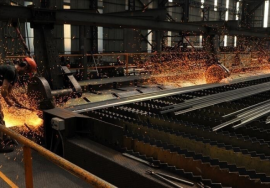
Today the steel industry is using technologies based on machine learning, artificial intelligence, and internal things. Machine learning with big data and artificial intelligence generates optimization strategies and auto-made processes it also allows control in the lifetime of machinery so the companies can generate program management with lower associate costs. The factory owners visit the real-time performance of the factories using big data and cloud computing. Implementation of Internet of Things elements like sensors connected by a network led the factories to work with a higher precision speed and quality so it can have better competitively in the market.