
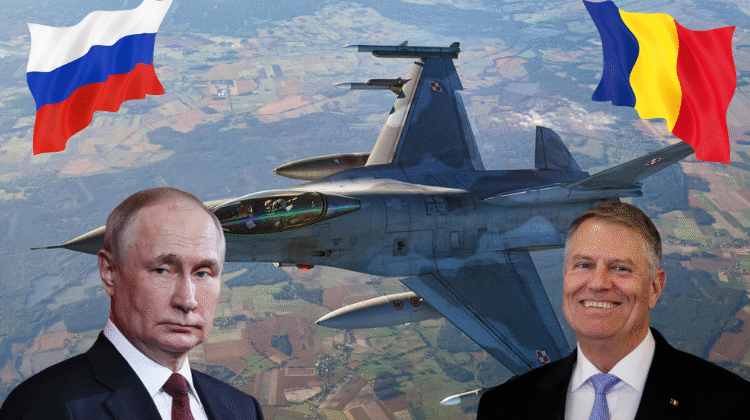
Romania Second NATO Nation in a Week to Record Russian Drone Incursion
In an apparent heightening of local tensions, Romania has become the second member nation of NATO to announce that a Russian drone had penetrated its airspace within days of a comparable event in Poland. The incursion, which Romania’s Defence Ministry stated lasted about half an hour, has sparked concern throughout the alliance over Moscow’s air activity in the context of the war in Ukraine.
The Incident
Based on official Romanian reports, the incursion took place on Saturday night close to Romania’s border with Ukraine. Two F-16 fighter aircraft belonging to the 86th Air Base were scrambled during an air-patrol mission in northern Dobruja. They identified a drone that had entered Romanian airspace, flying towards the south-west from north-east of Chilia Veche, then exiting near Pardina towards Ukraine.
The drone, which was a Russian “Geran” model (similar to the Shahed loitering munition designed by Iran), did not overfly populated regions and was not an immediate threat to civilians, officials reported.
Romanian officials confirmed that the pilots were given approval to bring down the drone, but during the moments of direct encounter, they did not fire after evaluating possible collateral risks. The incursion took approximately fifty minutes before the drone lost radar targeting and exited the country’s airspace. There were no injuries or damage to property.
Same Violations and NATO’s Response
This incident comes on the heels of a previous foray into Polish airspace, where some 19 Russian drones were said to have crossed. Poland and its NATO allies scrambled planes and destroyed a number of the drones. In response to these repeated forays, NATO has initiated Operation Eastern Sentry, intended to enhance allied alertness along the eastern border.
Romania previously (in February of 2025) signed into law the authority for its military to shoot down unmanned flying vehicles that intrude into its territory illegally, grounded in assessed levels of threat. That legislation provides thresholds in regards to threat to life and property but makes the legal foundation for reacting to such airspace intrusions.
Reactions and Diplomacy
The government of Romania attacked the act as “reckless behaviour” and an infringement of sovereignty. Defense Minister Ionuț Moșteanu highlighted that such intrusions pose danger to regional stability. Romania summoned Russia’s ambassador in Bucharest to present a diplomatic protest. The officials claimed that the intrusion was unacceptable and irresponsible.
EU Foreign Policy Chief Kaja Kallas, from Brussels, referred to the incursion as a “reckless escalation” and emphasized that transgression of the airspace of a member state is a grave violation of EU norms and collective security commitments. President Volodymyr Zelensky of Ukraine also expressed concern, describing such movements of drones as deliberate acts by Moscow to probe NATO’s reactions and push the boundaries of the war.
At the Russian end, authorities discounted responsibility or deflected allegations of a willful violation. A comment from the Russian diplomatic channel labeled the Romanian protest “unfounded” without independent confirmation.
Implications & Analysis
Alliance Deterrence and Integrity: These intrusions challenge the unity and reaction ability of NATO’s eastern members. The reality that two NATO countries have confirmed airspace breaches within a limited time-frame adds pressure on improving air defence readiness.
Rules of Engagement and Restraint: The Romanian reluctance to destroy the drone—even when it was legally allowed—hints at prudent policy. Risk of harming civilians, diplomatic repercussions, or miscalculation supposedly carried significant consideration.
Legal Frameworks Established, Challenges Persist: Romania’s new law assigns legal basis for action, yet effective application (e.g. establishing drone identification, determining instant threat) is still complicated in high-speed air space incidents.
Escalation or Provocation?: Members of the NATO and EU perceive these incursions as provocations, whether intentional or unintentional. Violations can be used for a variety of purposes: probing detection, response time, and political will. Whether Moscow intended this to be a message is subject to ongoing debate.
Regional Stability in Jeopardy: Given that the Black Sea region is already under tension as a result of Russian operations against Ukraine, even unarmed drone intrusions pose risks of miscalculation. If future intrusions lead to damage or casualties, the implications could snowball rapidly.