
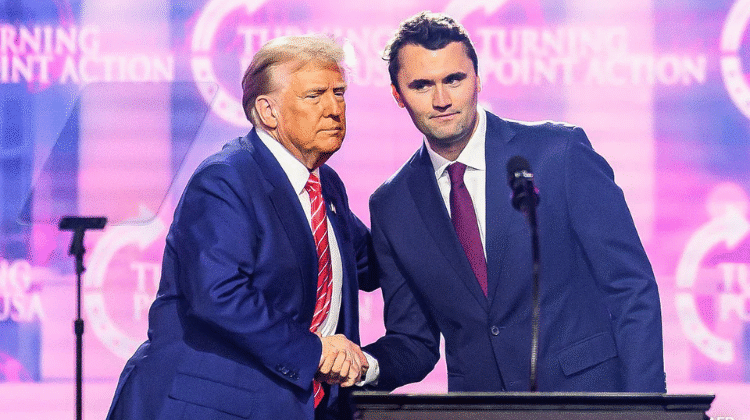
America has reached a dangerous turning point. Conservative activist Charlie Kirk’s assassination
America has reached a dangerous turning point. Conservative activist Charlie Kirk’s assassination on Sept. 10, 2025, has created a political firestorm — laying bare escalating divisions within public debate, polarization, and the framing and response to political violence. America today is at a crossroads: will this be a moment that deepens division, or begins a reckoning about civility and democracy? Recent events indicate the moment has never been more critical.
Charlie Kirk, 31 and the founder of Turning Point USA, was shot dead while giving a speech at Utah Valley University.
The immediate response ranged from shock, to sorrow, to outrage — on both sides of the aisle. But shortly thereafter, the narrative splintered, with right-wing media pointing fingers at the left, politicians on either end of the far right labeling Kirk a martyr, and the left cautioning against using Kirk’s death to justify further radicalization.
One of the most lethal side effects of the shooting has been the upsurge of incendiary rhetoric. Right-wing pundits, embracing robust retributionist, warlike, and martyrological vocabulary, have cautioned that the political left is now culpable.
On social media, there have been celebratory posts regarding the shooting, jokes about it, or claims that political differences now allow for violence. At the same time, right-wing leaders have denounced the crime but also blamed left-wing critics very much, with complaints that left-wing language had bred hostility towards conservative voices.
At the same time, sources of misinformation and disinformation are proliferating. Foreign adversaries — Russia, China, Iran — are using the Kirk assassination to stoke divisions inside the U.S., amplifying warring narratives, conspiracy theories, falsehoods about the shooter’s political leanings or motives, and blaming unrelated actors (such as Israel) for the act.
Domestic social media environments are filled with videos of the shooting, some unverified or inaccurate, circulating quickly on platforms.
Universities and schools have become flashpoints. Students who made fun of Kirk’s death have been expelled, and public response has been quick against those deemed insensitive or provocative.
Simultaneously, officials and politicians are urging investigation and punishment for celebrants and justifiers of the violence. The State Department even called for revoking visas from foreigners applauding the assassination.
Steps are being taken to police discourse, particularly on the internet, and to blame — a perilous course in free speech and political responsibility.
Another issue is that the event still undermines public trust. When individuals think political violence is possible and no institutions can safeguard them, cynicism increases. Surveys indicate that a significant majority (approximately 87%) are in agreement that political violence is an issue in present-day America.
Younger individuals are particularly concerned; in recent polls, more people under 30 think violence can be justified at times than in older populations.
The wild dissemination of unfounded rumors, conspiracy theories, and allegations on social media only serves to strengthen fear, rage, and suspicion — not just against political rivals but also against the corporations and media that shape public opinion.
So why is this moment a crossroads? There are two possible directions ahead:
Escalation: If the present trend continues — retributive rhetoric, politicians finger-pointing, online radicalization, misinformation unchallenged — then the path leads to further violence, further polarization, and the erosion of democratic norms. That the disagreement can result in assassination, that satiric or vituperative words can be punished extrajudicially (or through public shaming or employment loss), and that membership in a group determines victimhood — those are all bad precedents.
Reckoning and Reform: Alternatively, America may seize this moment to reexamine how it approaches political speech, gun control, the accountability of leaders and platforms, and how to separate ideology from identity violence. There’s potential for bipartisan appeals to re-center on the defense of free speech and denunciation of political violence, for regulatory or voluntary self-reform by social media platforms in dealing with disinformation, and for a public debate over how rhetoric creates reality.
Already, there are some actors trying to move toward that second way. Party leaders have criticized the act as above politics publicly. Officials have started exploring policies or legislation surrounding political violence. The FBI is probing, President Trump has denounced nonviolence, but while laying blame somewhat politically.