
When the Rivers Stop: What India’s Indus Waters Treaty Suspension Means for Pakistan
In a move that could reshape the geopolitical fabric of South Asia, India has announced it will suspend the treaty, placing it “in abeyance” until Pakistan makes what India deems a credible and irreversible move against cross-border terrorism. This isn’t just a diplomatic chess move. It’s a shot across the bow — and the first real crack in a pact that has kept the rivers flowing and the peace intact.
But what happens when the waters are no longer governed by rules? When rivers become bargaining chips in a larger conflict?
### A River Pact Forged in the Shadows of War
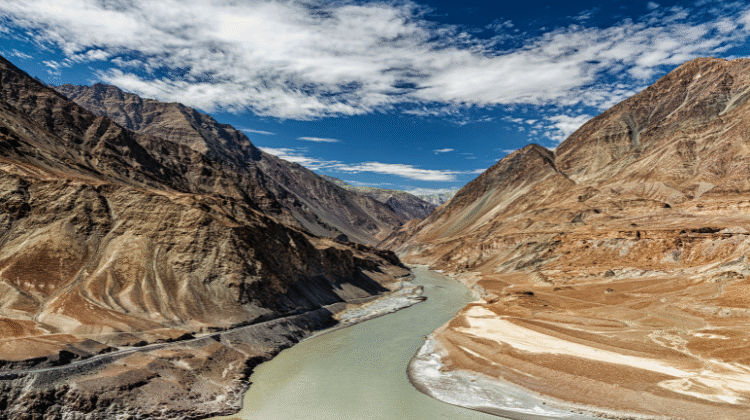
Signed in 1960 with the World Bank as a silent witness, the Indus Waters Treaty was an unlikely miracle. Despite being bitter rivals — and nuclear-armed — India and Pakistan managed to divide six mighty rivers of the Indus Basin. The three eastern rivers — Ravi, Beas, and Sutlej — flowed to India. The western giants — Indus, Jhelum, and Chenab — became Pakistan’s lifeline, delivering nearly 80% of the basin’s water.
India was allowed limited use of the western rivers for power and irrigation, but never at the cost of Pakistan’s access. That stability enabled Pakistan to engineer one of the largest irrigation systems in the world.
But with India stepping outside the treaty’s legal bounds, that foundation is now crumbling. And in its place rises a storm of uncertainty.
### Can India Really Shut Off the Taps?
The idea of India suddenly choking Pakistan’s water supply may sound apocalyptic, but the truth is more nuanced — and in some ways, more unsettling.
India’s existing dams, like Baglihar and Kishanganga, are not built to hold back the vast torrents of snowmelt that rage from May to September. These are run-of-the-river projects with minimal storage capacity. Any attempt to drastically limit flow during the monsoon season could backfire — flooding Indian territories upstream.
But what about winter? When rivers thin to a trickle and timing is everything? That’s where the real danger lies. A carefully timed delay — a withheld release — could throw Pakistan’s planting cycles into chaos. It wouldn’t take much. Just a few weeks’ shift could mean wilted wheat, missed sowing windows, and higher food insecurity.
### The Chilling Domino Effect
In Pakistan, the water that flows from the western rivers does more than grow crops — it powers turbines, fills reservoirs, and sustains cities. Nearly a third of the country’s electricity comes from hydropower. Disrupt the rhythm of those rivers, and you don’t just dim lights — you darken futures.
And then there’s the Indus Delta, already shrinking from reduced freshwater outflow. Further uncertainty could devastate coastal ecosystems and livelihoods. A fractured treaty doesn’t just threaten food and energy security — it shakes the very foundations of social and political stability.
### The Real Battle: Predictability vs. Panic
Even if the water doesn’t stop tomorrow, the illusion of certainty already has. And that’s enough to trigger panic.
Pakistan’s entire water system runs on predictability — when the canals open, when the crops are sown, when the turbines spin. Remove that rhythm, and you introduce chaos. Provinces will quarrel over allocations. Farmers will second-guess their seasons. Power shortfalls will spread. And beneath it all will be one question no one can answer: *When will the next drop arrive?*