
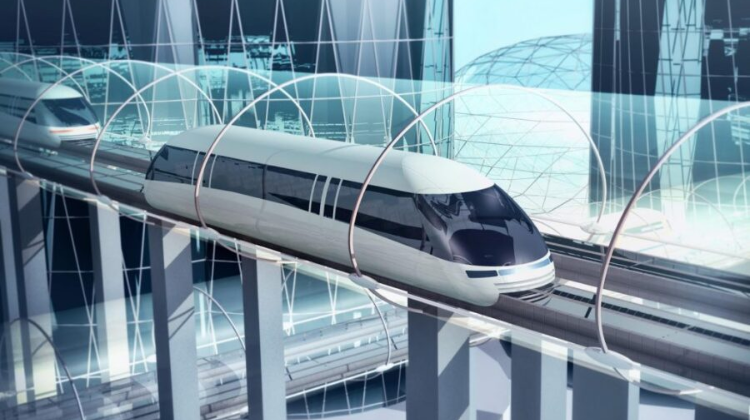
The Future of Transportation: Understanding Hyperloop Technology
What is Hyperloop Technology?
Hyperloop is a revolutionary transportation system designed to move passengers and cargo at ultra-high speeds using *vacuum-sealed tubes and magnetic levitation (maglev). This futuristic technology aims to redefine travel, offering a **faster, more efficient, and environmentally friendly* alternative to traditional transport systems.
*How Does Hyperloop Work?*
The Hyperloop system functions through a combination of advanced engineering principles:
1. *Vacuum Tubes:* The transport pods move inside a near-vacuum tube, drastically reducing air resistance.
2. *Magnetic Levitation (Maglev):* The pods float above the track using electromagnetic forces, eliminating friction.
3. *Electric Propulsion:* Linear electric motors propel the pods forward at speeds exceeding *1,000 km/h (620 mph)*.
4. *Minimal Energy Consumption:* The system can integrate renewable energy sources such as solar power, making it sustainable.
*Which Countries Are Developing Hyperloop?*
A single country does not own Hyperloop technology but is being developed by several companies worldwide. The concept was originally proposed by *Elon Musk* in 2013, and since then, multiple organizations have taken on the challenge of making it a reality. Some of the leading players in Hyperloop development include:
– *Virgin Hyperloop (USA)* – Conducted the first passenger test in 2020 in Nevada.
– *Hyperloop Transportation Technologies (HTT) (USA/Global)* – Developing commercial applications worldwide.
– *Tesla & SpaceX (USA)* – Conducted test track experiments and competitions to advance the technology.
– *Zeleros Hyperloop (Spain)* – A European company working on independent Hyperloop systems.
– *China (CASIC – China Aerospace Science and Industry Corporation)* – Developing its own high-speed vacuum train.
– *India, UAE, and Europe* – Exploring Hyperloop feasibility for high-speed transport corridors.
*Hyperloop Developments Around the World*
1. *USA:* Virgin Hyperloop successfully carried passengers in a test pod in Nevada, reaching speeds of *172 km/h (107 mph)*.
2. *India:* Maharashtra has partnered with Virgin Hyperloop to explore a Mumbai-Pune corridor that could reduce travel time to *25 minutes*.
3. *China:* Conducting high-speed Hyperloop experiments with ambitious plans for nationwide implementation.
4. *UAE:* A proposed *Dubai to Abu Dhabi* Hyperloop could cut travel time to just *12 minutes*.
### *Benefits of Hyperloop Technology*
✔ *Ultra-Fast Travel:* Could reach speeds of *1,200 km/h (750 mph)*, reducing travel time drastically.
✔ *Energy Efficiency:* Uses renewable energy sources, making it environmentally friendly.
✔ *Cost-Effective:* Hyperloop fares could be lower than airline tickets once operational.
✔ *Reduced Traffic Congestion:* Hyperloop can replace long road journeys with faster, smoother travel.
### *Challenges of Hyperloop Implementation*
❌ *High Infrastructure Costs:* Initial development and construction require massive investments.
❌ *Safety Concerns:* The technology needs rigorous testing to ensure passenger safety.
❌ *Land Acquisition Issues:* Building long vacuum tubes requires significant land space.
❌ *Regulatory Approvals:* Governments need to develop regulations for this new mode of transport.
*Is Hyperloop the Future of Travel?*
The Hyperloop has the potential to revolutionize global transportation, making high-speed travel more accessible and eco-friendly. While the technology is still in its early stages, the progress made by various companies and governments is promising. If successful, Hyperloop could become a *game-changer* for intercity and international travel.