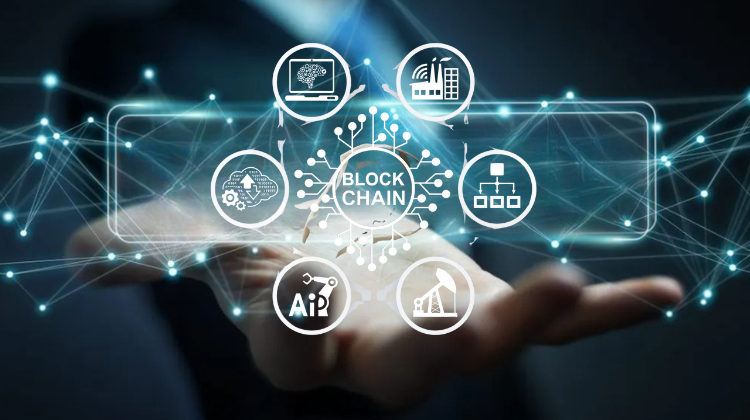
How Blockchain Is Transforming Supply Chains and Financial Transparency
Introduction: A Digital Transformation in Business Operations
In a more globally integrated economy, companies are under mounting pressure to make their operations more efficient, accountable, and trustworthy. Scattered information, manual checks, and third-party involvement characterize conventional supply chains and financial channels. Blockchain technology is being advocated as a promising solution to this problem. With a blockchain, companies can tap into a highly reliable and transparent platform for authenticating financial and supply chain transactions.
Introduction to Blockchain and Its Main Characteristics
Blockchain technology is a digital ledger that is distributed and records transactions in a network of computers in a manner that makes it hard to manipulate and alter. A transaction is placed in a ‘block,’ which is linked in a chain, creating a permanent record of transaction history. Some fundamental characteristics, such as decentralization, immutability, and real-time validation, make blockchain technology very relevant in complicated business environments. Such qualities enable all parties to share access to ‘truth,’ thus ensuring a high level of trust among them.
Improving Traceability in Supply Chains
One of the most important effects of blockchain technology is how it can prove to be an efficient tool for enhanced traceability in the supply chain. Hence, in a traditional setup, tracing a product right from when it is a commodity to when it can be delivered to a consumer takes time and can be inaccurate. With blockchain technology, companies can keep a record of all steps a product undergoes in a common ledger. Such an attribute can prove to be an important asset to industries such as food, pharmaceuticals, and production because it can help in ensuring product authenticity and reduce the chances of a product being a counterfeit one.
Enhancing Efficiency and Minimizing Expenses
By reducing waste in these systems, blockchain eliminates the need for a series of middlemen to reconcile differences. Smart contracts, which are self-executing contracts coded into these blockchain systems, allow these payments to be executed automatically when certain statements are fulfilled. Payments can, therefore, be automatically released when goods reach their destinations and have been successfully delivered. The above implies a quicker turnaround time and a quicker cash flow for these companies.
Strengthening Financial Transparency and Accountability
Financial transparency is becoming an increasingly important consideration for companies, investors, and government bodies. Blockchain technology offers a transparent ledger of financial transactions, which can be viewed and traced with ease in real-time. With blockchain technology, financial statements can be presented with ease, especially for companies with global operations. Such companies will benefit from accurate financial statements using blockchain technology because financial transparency is enhanced.
Establishing Trust among Stakeholders
Trust is an essential part of both supply chain and financial chain operations. Trust in a supply chain or financial system can be given to blockchain because it prevents any manipulation of information without consensus from all parties in a supply chain or financial network. Everyone, including suppliers, manufacturers, and financial institutions, can access information. Such an approach leads to less friction when working with others because all people have access to information. Trust in a financial system is an important factor where blockchain technology acts as a facilitator.
Strengthening Compliance and Risk Controls
However, regulatory requirements are increasing in complexity owing to government regulations and guidelines concerning data security, product safety, and financial statements. Blockchain assists in satisfying such requirements with a record-keeping feature where accurate records can be time-stamped in a manner that can be traced subsequently with ease. In this case, in supply chain management, this assists in staying within safety and sustainability requirements. In financial matters, blockchain assists in financial reporting in line with government regulations, thus avoiding penalties in case of financial defaults.
Markets Drive Sustainability & Ethical Behaviours
Blockchain technology is also being used in sustainability and ethical procurement. Through blockchain, companies can check if their products are produced and sourced in a manner consistent with sustainability requirements. Consumers are becoming very particular about companies being transparent in terms of where and how products are sourced. Companies can provide a boost to brand reputation in terms of sustainability using blockchain technology.
Obstacles and Future Trends
Although blockchain technology holds a lot of promise, it is not without its challenges in adoption. Some of these include integrating blockchain with existing technology, scalability, and standardization. In addition to this, investment in technology and other infrastructure is necessary if companies are to realize all the potential offered by blockchain technology. Nevertheless, with technology evolving and industries working towards common solutions for blockchain technology, these challenges will soon be a thing of the past.