
Data-Driven Decision Making: Turning Business Data into Profit
In today’s highly competitive and fast-moving business environment, data has become one of the most valuable assets an organization can possess. Companies generate vast amounts of data every day through customer interactions, digital platforms, supply chains, and internal operations. However, the real value of data does not lie in its volume but in how effectively it is analyzed and used. Data-driven decision making refers to the practice of using data insights to guide strategic and operational choices. When implemented correctly, it enables businesses to reduce uncertainty, improve performance, and ultimately turn information into measurable profit.
At its core, data-driven decision-making replaces intuition-based judgments with evidence-backed strategies. While experience and instincts still matter, relying solely on them can lead to biased or outdated decisions. Data provides a clearer picture of what is actually happening within a business and the market. By analyzing trends, patterns, and performance indicators, managers can identify what works, what does not, and where improvements are needed. This approach leads to more accurate forecasting, better resource allocation, and reduced risk in decision-making.
One of the most significant ways data-driven decision-making drives profit is through improved customer understanding. Businesses can collect data on customer behavior, preferences, purchasing patterns, and feedback. By analyzing this data, companies can tailor their products, services, and marketing strategies to better meet customer needs. Personalized offerings and targeted marketing campaigns increase customer satisfaction, boost conversion rates, and enhance customer loyalty. As a result, companies can increase revenue while reducing the cost of acquiring and retaining customers.
Operational efficiency is another major area where data-driven decisions deliver financial benefits. Data analytics allows businesses to closely monitor processes across production, logistics, inventory, and service delivery. Inefficiencies, bottlenecks, and wastage that might go unnoticed through traditional management approaches can be quickly identified using data. For example, analyzing production data can help reduce downtime, optimize machine usage, and improve quality control. In supply chain management, data insights can minimize inventory holding costs, prevent stockouts, and improve supplier performance. These improvements directly translate into cost savings and higher profit margins.
Data-driven decision-making also plays a crucial role in pricing and revenue optimization. Businesses can analyze market data, competitor pricing, demand fluctuations, and customer price sensitivity to set optimal prices. Dynamic pricing strategies, supported by real-time data, enable companies to adjust prices based on demand and market conditions. This ensures that products and services are neither underpriced nor overpriced, maximizing revenue potential. Data-backed pricing decisions help companies stay competitive while protecting profitability.
Risk management is another area where data-driven decisions contribute to long-term profitability. By analyzing historical data and current trends, businesses can identify potential risks related to finance, operations, compliance, and market volatility. Predictive analytics allows organizations to anticipate problems before they occur and take preventive measures. This reduces the likelihood of costly disruptions, legal penalties, or reputational damage. Companies that proactively manage risks using data are better positioned to maintain stable performance and investor confidence.
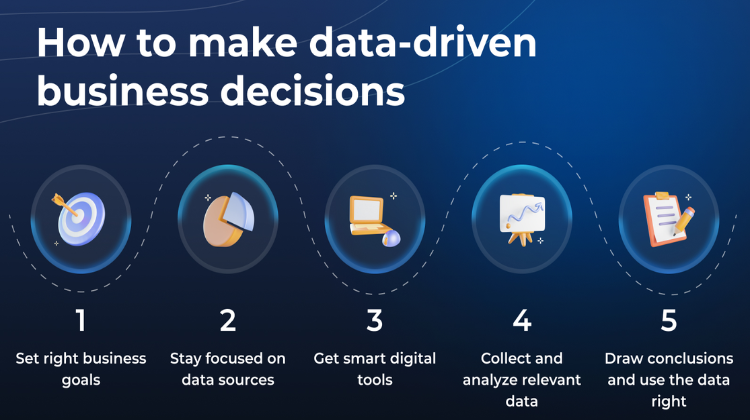
Despite its benefits, adopting a data-driven approach requires more than just collecting data. Organizations must invest in the right tools, technology, and skills to analyze and interpret data effectively. Business intelligence systems, data analytics platforms, and dashboards help convert raw data into actionable insights. Equally important is building a data-driven culture where employees at all levels understand the value of data and use it in their daily decision making. When leadership supports data-driven thinking and encourages transparency, data becomes a shared asset rather than a siloed resource.
Another key factor in turning data into profit is ensuring data quality and relevance. Poor-quality data can lead to inaccurate insights and flawed decisions. Businesses must focus on collecting accurate, timely, and relevant data while maintaining data governance and security. Clean, well-structured data enables reliable analysis and builds trust in data-driven recommendations. When decision-makers trust the data, they are more likely to act on insights that drive growth and efficiency.
In conclusion, data-driven decision-making has become a powerful driver of profitability in modern businesses. By leveraging data to understand customers, optimize operations, manage risks, and refine pricing strategies, companies can make smarter and faster decisions. The shift from intuition-based management to evidence-based decision making allows organizations to stay agile, competitive, and resilient. Businesses that successfully turn data into actionable insights gain a significant advantage, transforming information into sustained profit and long-term success.